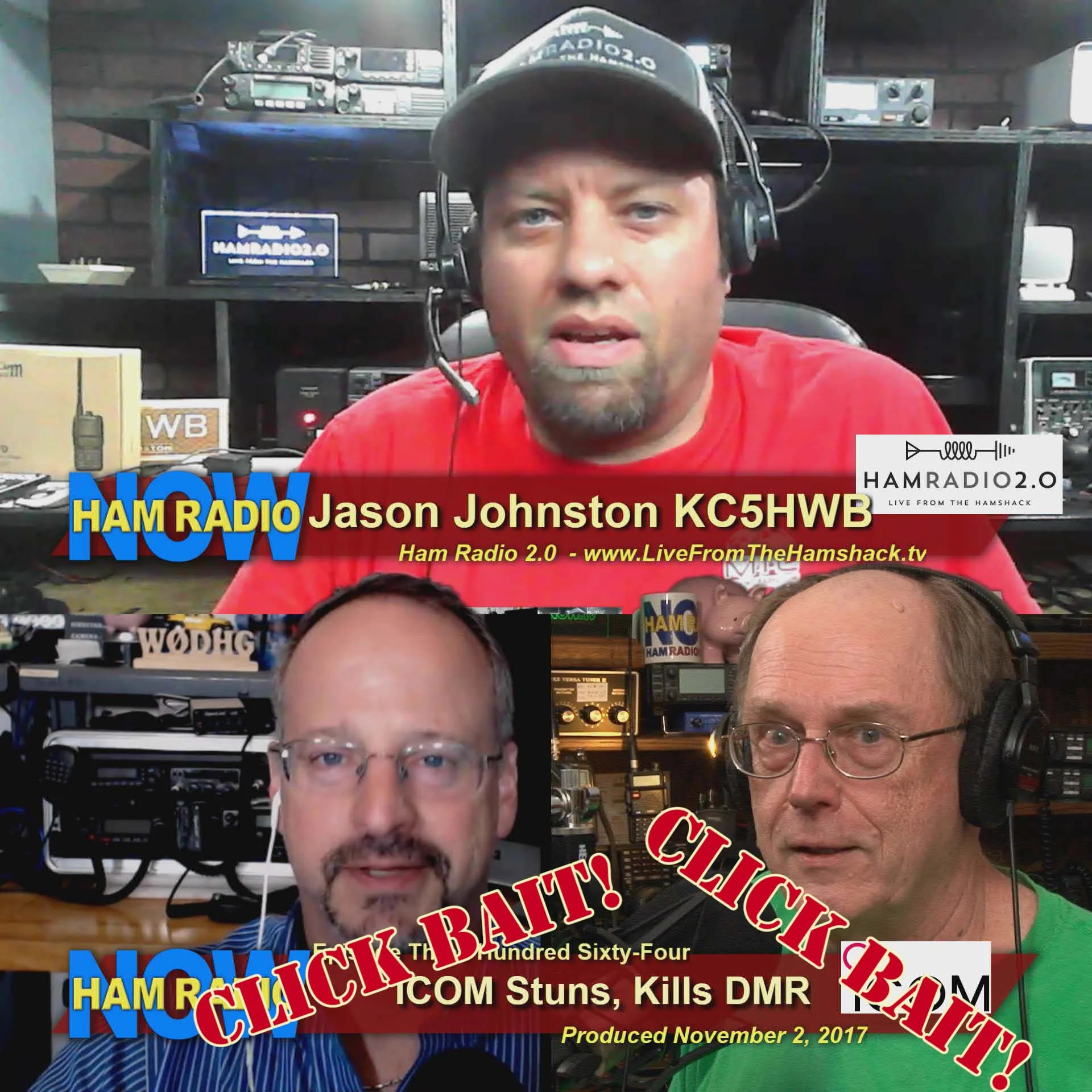
HRN 364: ICOM Stuns, Kills DMR (Click Bait Title)

We lead this episode with a note from ARRL HQ responding to our Force of Two episode about ham radio's part in Puerto Rico's recovery from Hurricane Maria. We invited the League's Emergency Preparedness Manager Mike Corey KI1U to talk to us (or pass the request along). He did pass it along, HQ declined the invitation to appear, but did send a short note that we'll read.

Next, the click-bait headline story. On October 30, Ray Novak N9JA, Amateur Division Manager for Icom America, wrote a story on the ICOM blog titled Is Your Digital Repeater Ham Friendly? Our baitworthy headline comes from Ray's warning that some features in the radios designed for an un-named commercial digital radio service (cough dmr cough) can be used against the unwary operator (stun, kill, monitor) and have no place in the amateur radio service. We agree, but find Ray's treatment of the subject somewhat opaque, heavy-handed, and less than helpful. But what the heck - we're clearly not above a click-bait headline ourselves.

Helping us understand the details is Jason Johnston KC5HWB from the Ham Radio 2.0 show. Jason reviews just about every Chinese/DMR radio that crosses the ocean to America. Ray also casts a shadow over a DMR 'required feature' called talkgroups. Our discussion branches out to cover that and other comparisons between DMR and D-STAR.

Finally, the night before the show, CBS aired a new episode of NCIS that had a significant ham radio element. We show a couple of clips that do the usual hack job on real ham procedure, but also include an almost press-release explanation of what ham radio is. Unfortunately (we are told... we didn't watch the whole show) the ham-protagonist in the plot turns out to be unstable, and (we are told) that hams are portrayed as anti-social in general. Maybe we should watch the whole thing.

AUDIO LISTENERS: Radio Rating: A-. We read all of the ARRL's note, so you won't miss that on-screen. There's a link to Ray's blog so you can see it all for yourself, as we don't read the whole thing to you. And you'll miss the video from NCIS, but if you picture a well-equipped, Kenwood-centric station, the dialog will carry you the rest of the way.
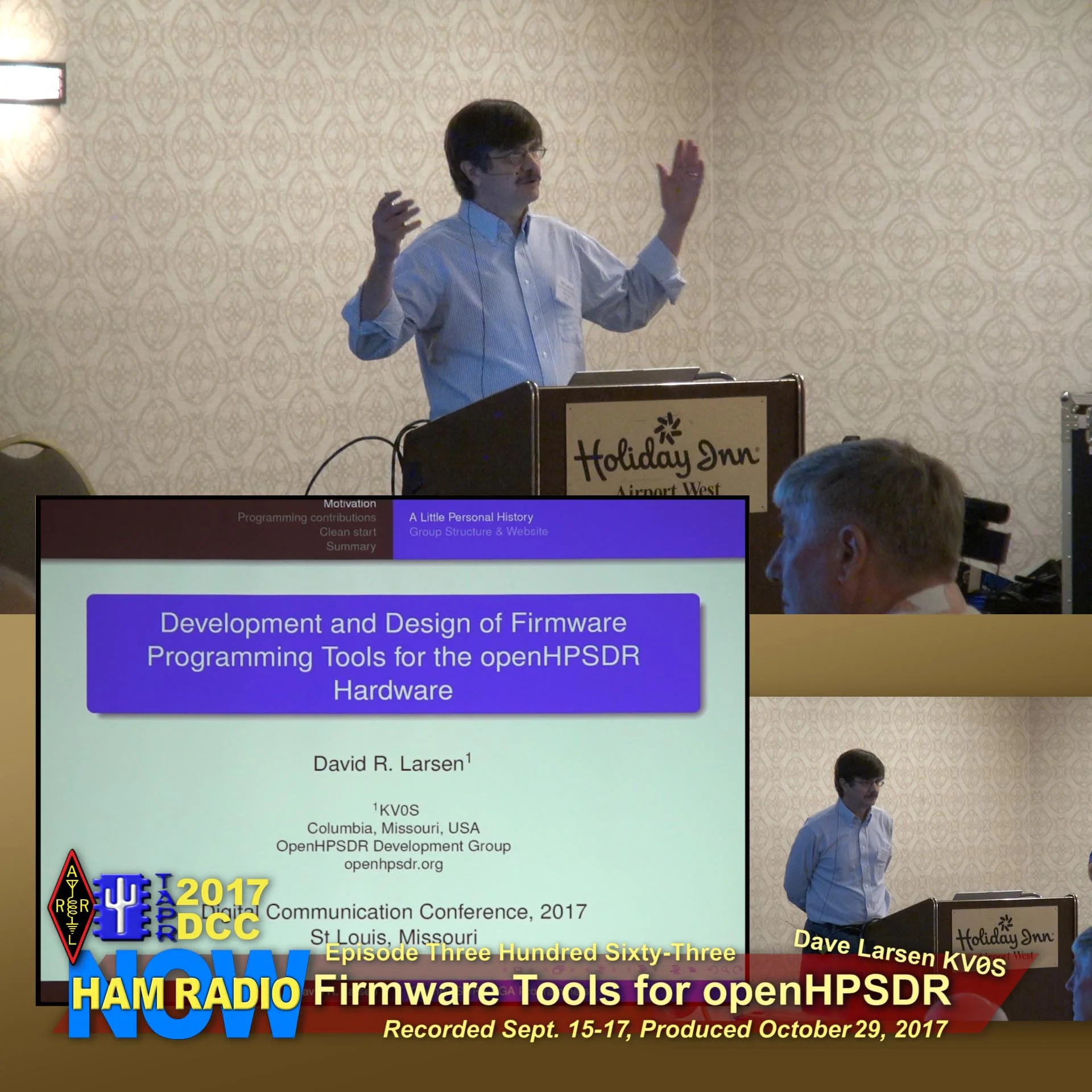
HRN 363: Firmware Tools for openHPSDR - Dave Larsen KV0S from the 2017 DCC

Dave Larsen KV0S's complete title for this talk is Development and Design of Firmware Programming Tools for the openHPSDR Hardware. And that says a lot about where this talk is going.

HPSDR - High Performance Software Defined Radio - is an ongoing DIY project that began in conjunction with TAPR do design and built the first direct sampling SDR HF 'transceiver' for amateur radio. It's been going on for more than a decade, and the ARVN videos from the 2008 and 2009 DCC's have several talks describing the progress (find them on the HamRadioNow.tv web site's TAPR archives).

Dave's talk is something of a history lesson, focusing on tools to program the boards. 

The industry has moved on, with companies like FlexRadio, ICOM, Elad and others producing off-the-shelf SDR radios, but the HPSDR project continues for hams who want to learn more and build their own.

Radio Rating: C or D. Dave has a lot of text, but also some slides with charts and pictures of the software GUI's. So if you're already familiar with the HPSDR system, you might not need the images to absorb the talk. If you're not deep into HPSDR, but you are interesting in programming, you'll probably need the pictures. And if you're not deep into either, come back to the video when you've gotten your feet (ankles, and maybe knees) wet in SDR.

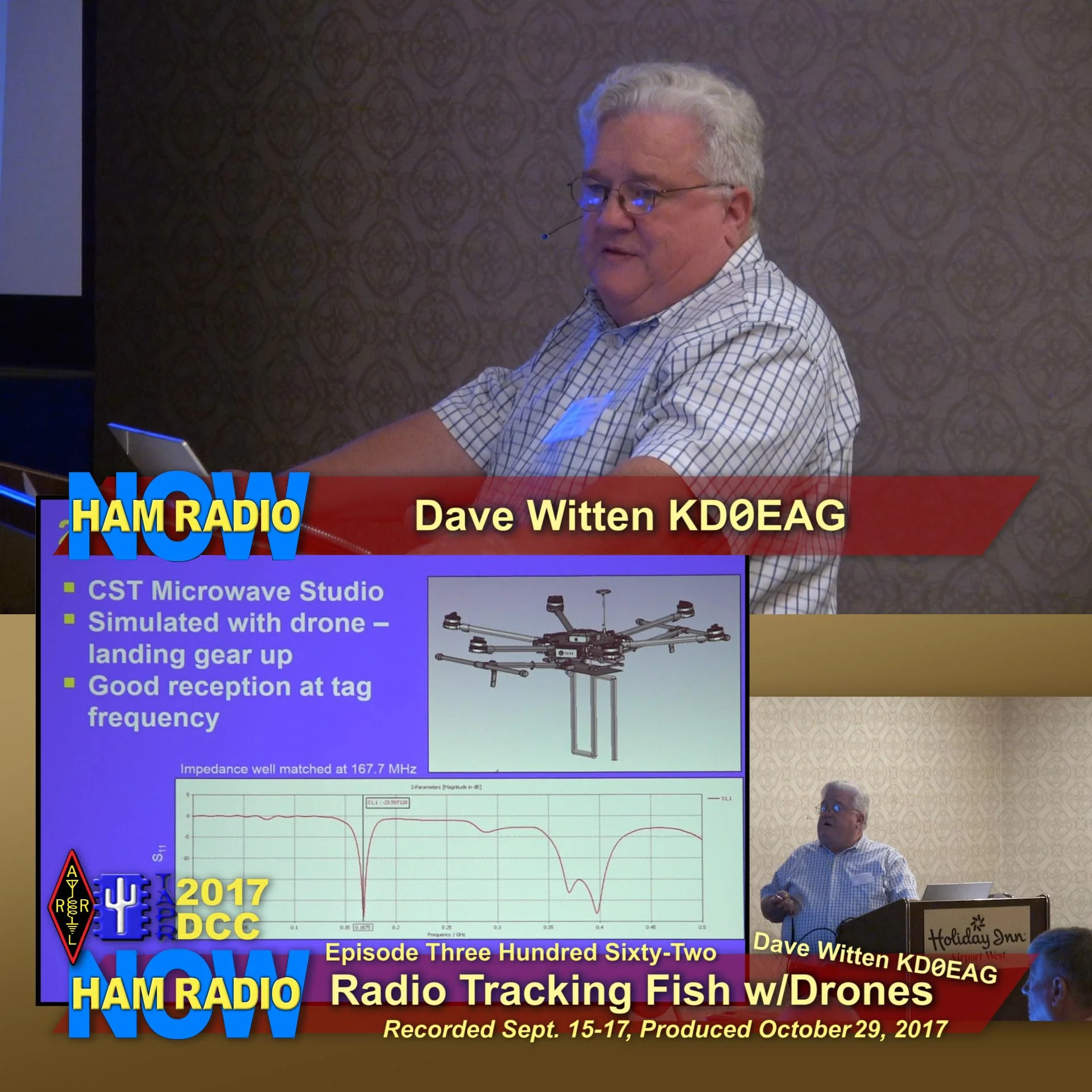
HRN 362: Radio Tracking Fish with Drones - Dave Witten KD0EAG from the 2017 DCC

Midwestern rivers have a serious problem with an invasive species of carp that the USGS was trying to track using radio tags (yep, on the fish). But they needed some radio expertise to advance the project to receive the signals using drones rather than people with yagi's on boats. Dave Witten KDOEAG got involved through a request for help at his local radio club.

This talk follows the progress of the project, which rapidly grew to include multiple agencies (including NASA) and experts... and Dave. It's not ham radio, but it is an interesting exploration of radio technology where you might not expect it.

Radio Rating: C+. Dave has lots of pictures of the devices and locations, and some charts and graphs. You'll miss that detail in the audio-only presentation, but you'll get the gist of the project. Watch the video here if you're more intrigued.